13th month pay
KAMI handles 13th month pay in two separate places, and confusing them causes most of the questions: an accrual that builds up on every payslip through the year, and a bonus run that actually pays it.
Where: Payroll › the payroll run (accrual) · Payroll › the run › Bulk bonus (payment) You need: payroll rights for that batch cycle
The accrual and the payment are not the same thing
| What it is | Where it appears | |
|---|---|---|
| Accrual | A running total of what has been earned toward 13th month | On each payslip, and as a year-to-date figure |
| Payment | The actual bonus paid to the employee | A bonus created on a payroll run |
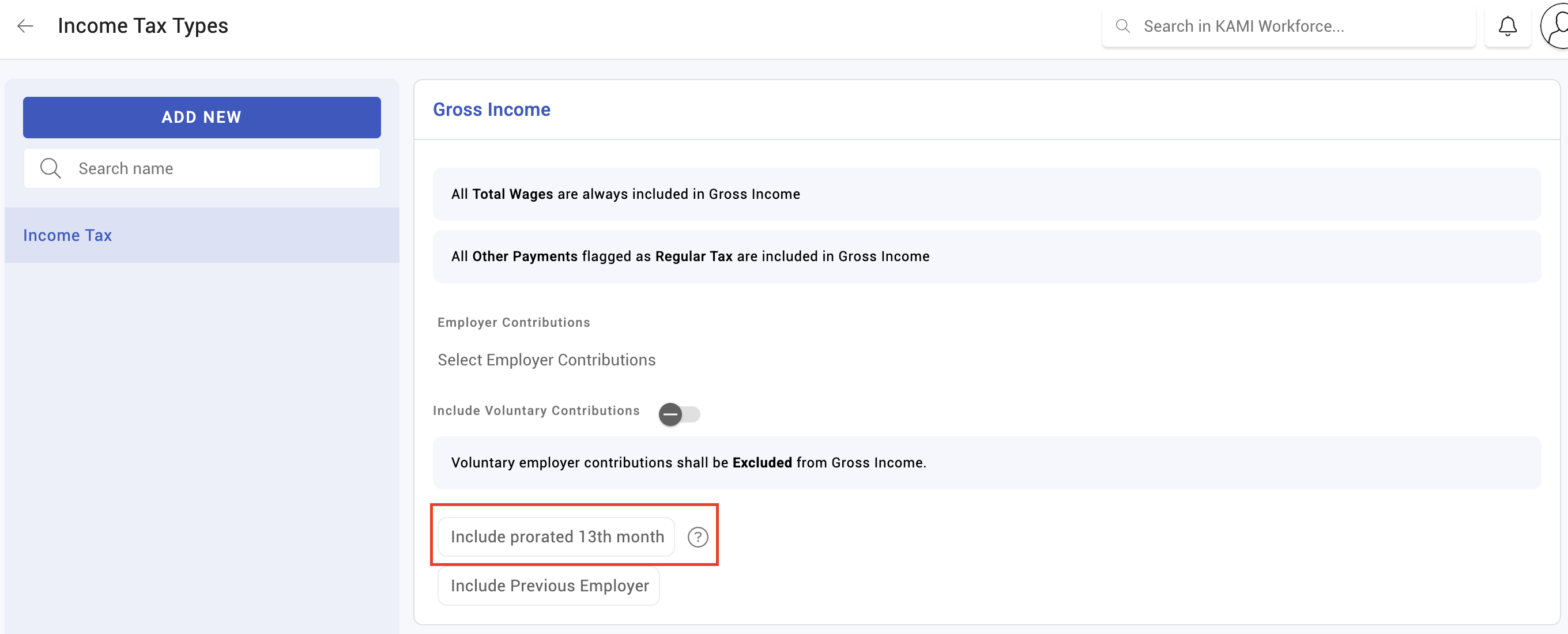
The accrual is a liability view — it tells you what you owe if you paid today. It does not pay anybody. Turning the accrual off does not change what an employee is entitled to, only whether you can see it accumulating.
How the accrual builds
Each payslip adds a share of one month's basic wage:
basic monthly wage × proration ÷ 12 ÷ cycles per monthSo on a semi-monthly cycle, each payslip accrues half of one twelfth of a month's basic wage. Someone employed for part of the period accrues proportionally, which is what the proration term does.
The year-to-date figure accumulates these from the employee's hire date, so a mid-year joiner's accrual reflects their actual service rather than a full year.
Paying it
The payment is created as a bonus, usually across everyone at once — see Bulk bonuses and bonus tax. What matters is the wage basis you pay it on:
| Wage basis | Pays from |
|---|---|
| Basic Salary | The contractual basic salary |
| Basic Monthly Wage | The derived basic monthly wage |
| Fixed Monthly Wage | Basic plus fixed recurring allowances |
| Gross Monthly Wage | Basic plus other payments in the gross basis |
| Average Total Wage | An average of actual total wage |
| Fixed Amount | A flat figure you set |
⚠️ These produce materially different amounts for the same employee. Someone with substantial allowances gets noticeably more on a gross basis than a basic one. This is a policy and compliance decision, not a preference — confirm it against your jurisdiction's rules and your employment contracts before running it.
Country differences
The defaults are not the same everywhere, and they are defaults rather than rules — check yours:
| Philippines | Indonesia | |
|---|---|---|
| Default wage basis | Basic Salary | Basic Monthly Wage |
| Minimum service | None | One month |
| Month rounding | None | Rounded down |
Indonesia's minimum service and downward rounding mean a short-service employee can be entitled to nothing where the same employee in the Philippines would receive a prorated amount.
What Happens Next
- The accrual updates every time a payslip is calculated. It is a view of the liability, not a payment.
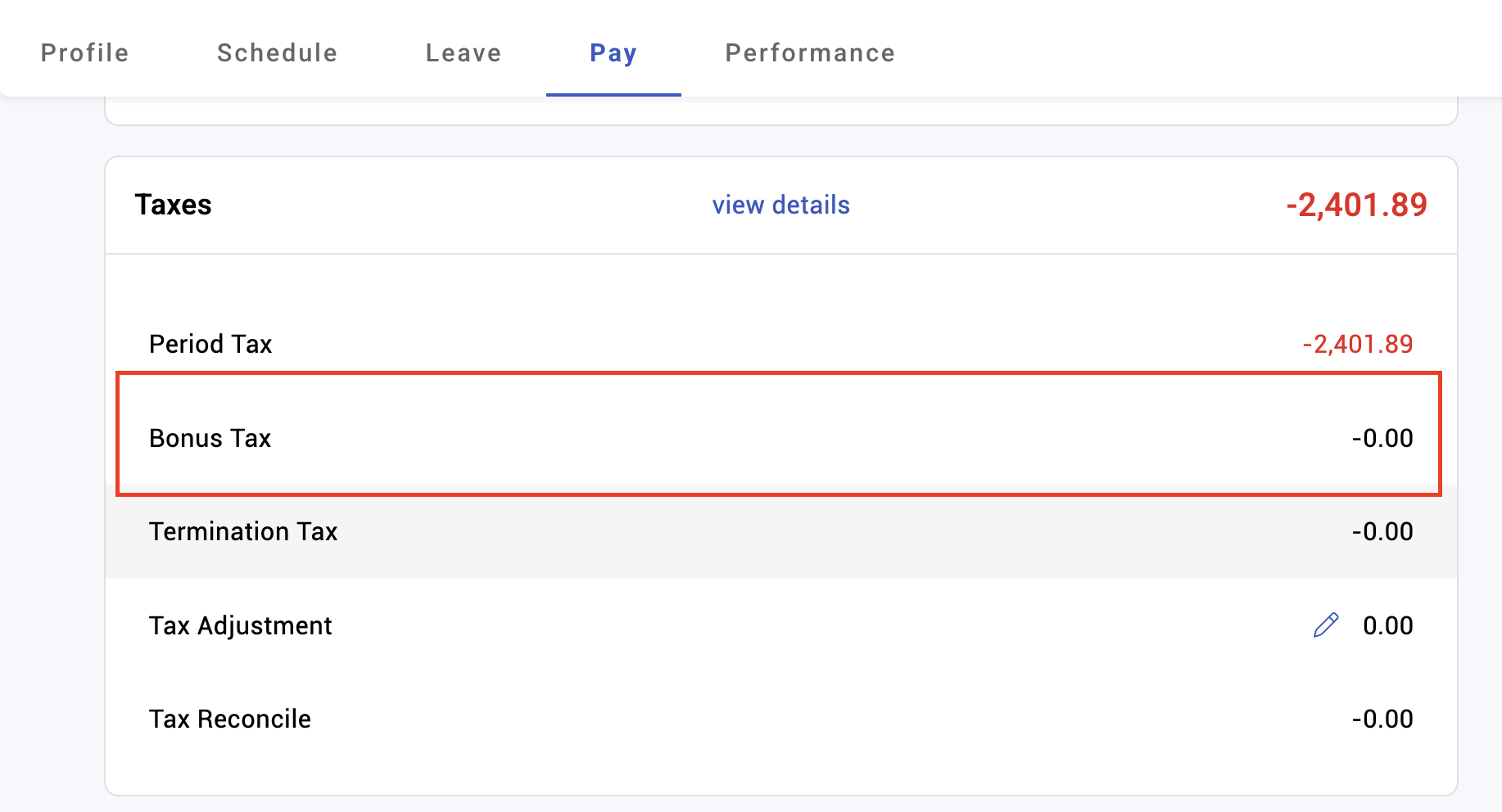
- The payment is taxed as a bonus, which is a different treatment from regular income — and because KAMI taxes annually, it raises tax for the remaining periods of the year. See Payslip tax details explained.
- Once paid, it appears in the year-end reporting for the period it was paid in, not the year it accrued over.
Tips
- Turn the accrual on from the start of the year. It costs nothing, and it means the liability is visible all year rather than being discovered in November.
- Agree the wage basis before December, in writing, with whoever owns compliance. Changing it after the first payment is paid is a very awkward conversation.
- Reconcile the accrual against what you are about to pay. A large gap means either the basis differs from the accrual's assumption or someone's service dates are wrong.
- Warn employees about the tax effect. A bonus raises withholding for the rest of the year, and the complaint arrives in January otherwise.
- Check joiners and leavers individually. Proration and minimum-service rules apply exactly where the amounts are least standard.
Troubleshooting / FAQ
Q: The accrual does not appear on payslips. Its display is a setting. Turn it on and recalculate — it is computed at calculation time.
Q: The accrual does not match what we paid. The accrual builds from basic monthly wage. If you paid on a different wage basis — gross, or average total wage — the two will legitimately differ.
Q: A mid-year joiner's 13th month looks low. It is prorated to their service. In Indonesia a minimum service period may also apply.
Q: Tax on the bonus looks very high. Bonus income is taxed on the bonus basis, and KAMI annualises, so it lifts withholding across the remaining periods.
Q: Can we pay it in two instalments? Yes — create the bonus twice for the portions you intend. Check the tax result each time rather than assuming it halves.
Screenshots
These screenshots came from our previous help centre and may show an earlier version of the interface.