Your loans and advances
If you have a company loan or have taken an advance on your wages, this is where you see what you owe, what you have paid, and when it ends.
Where: Benefits › My loans You need: nothing special — every employee can see their own
What you can see
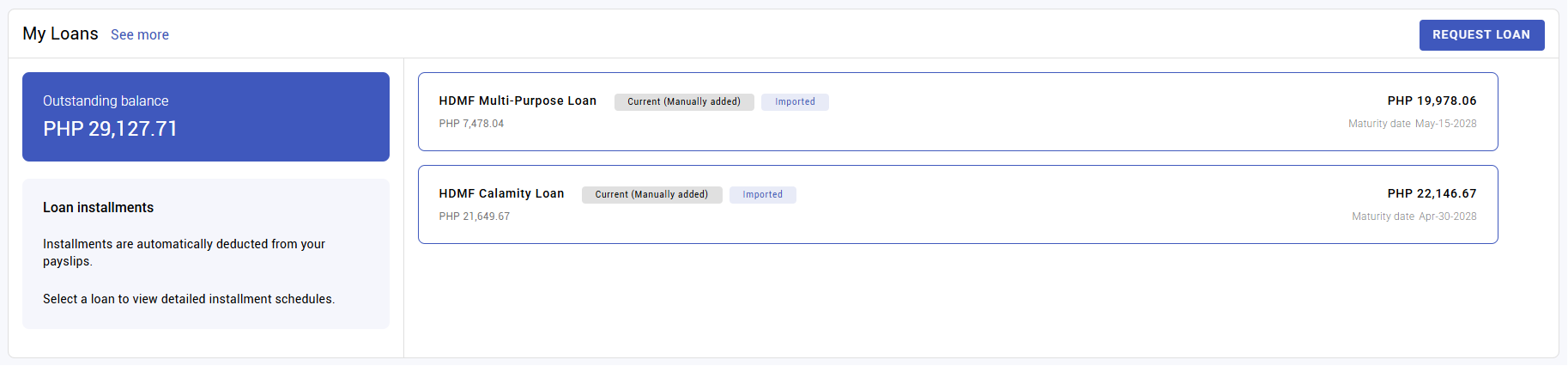
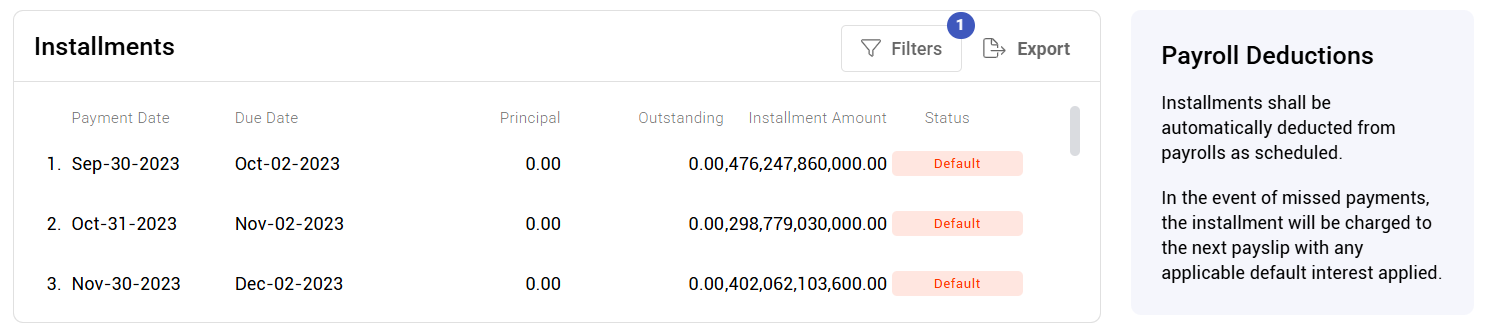
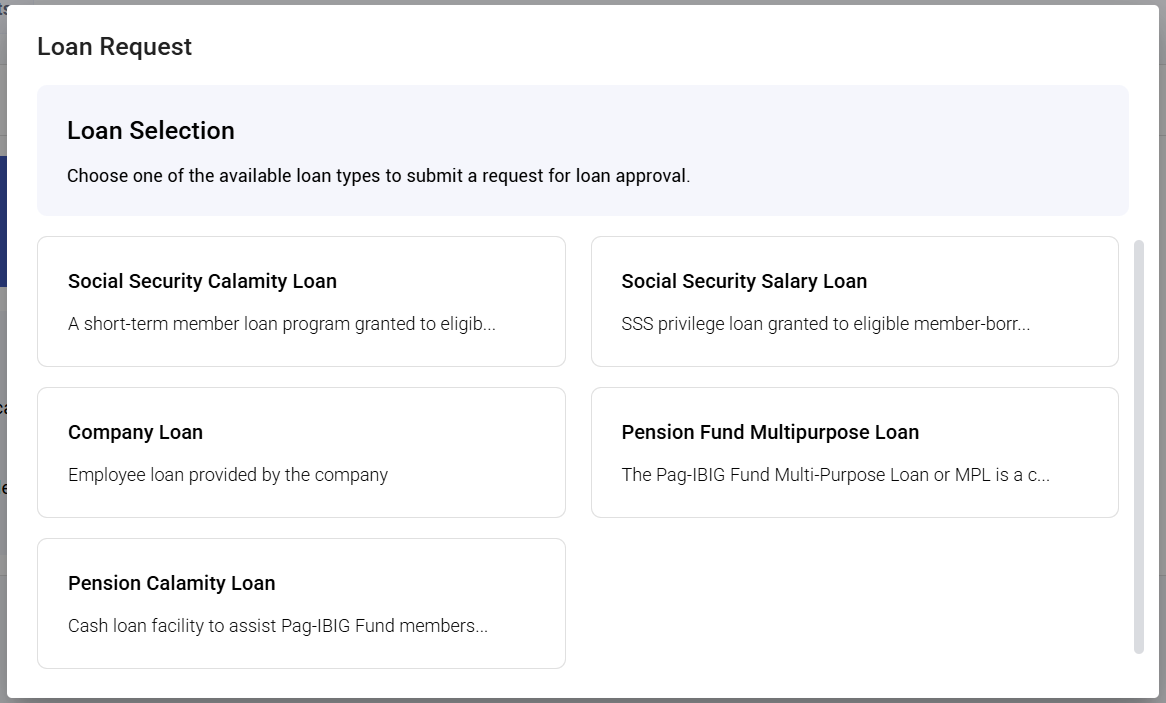
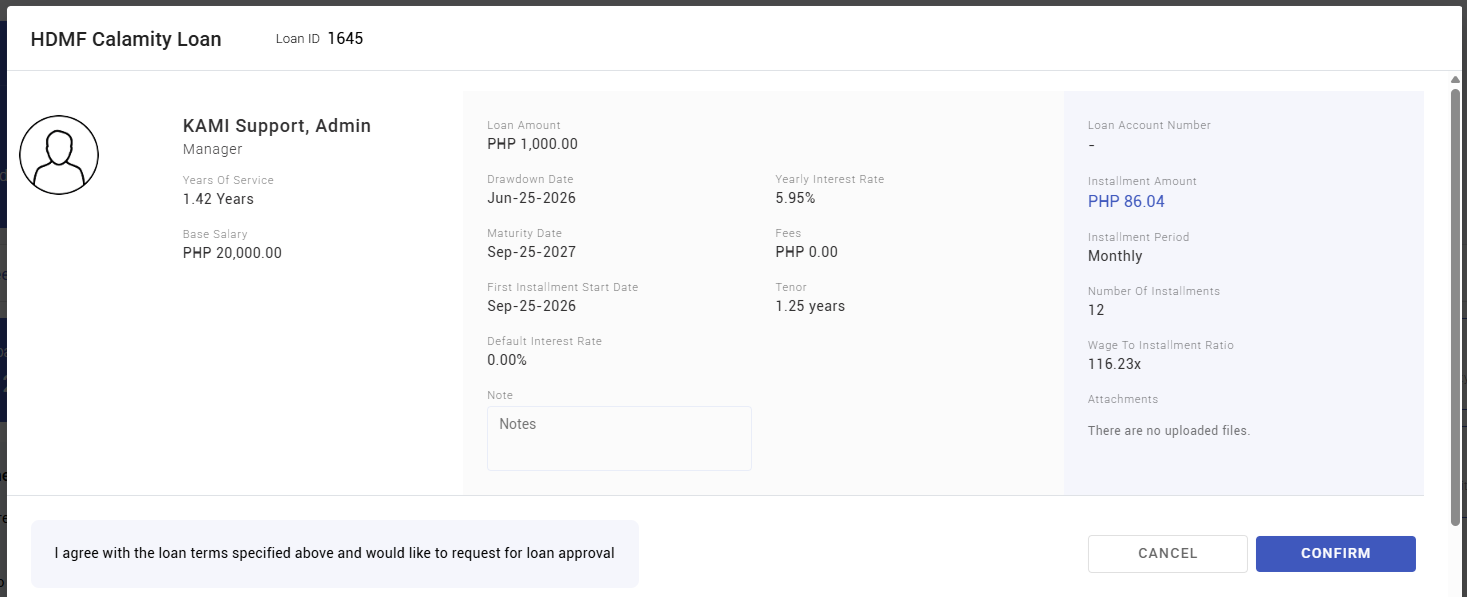
Your loans — each one with its outstanding balance, the instalment amount, and the schedule of payments still to come.
Your advances — anything drawn against wages you have already earned, and what will be recovered from your next payslip.
Reading your loan
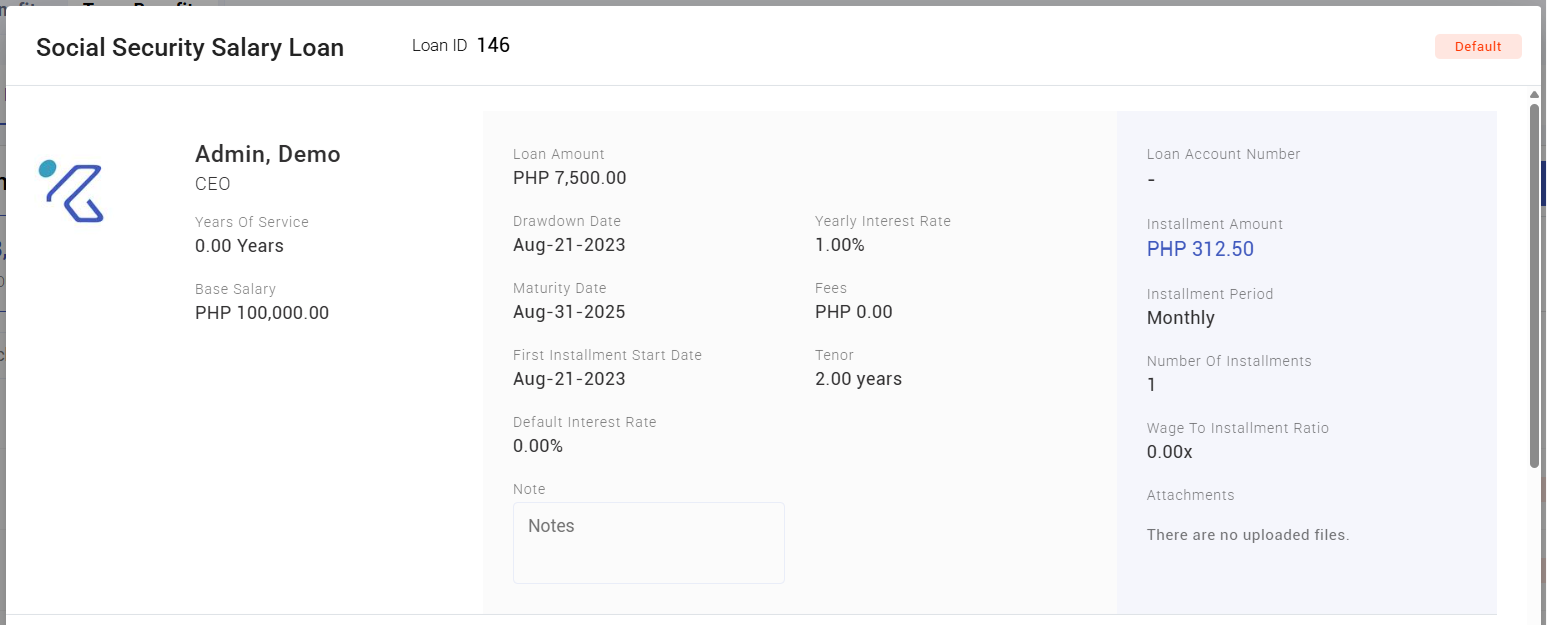
Three figures answer most questions:
| Figure | Tells you |
|---|---|
| Outstanding balance | What you still owe today |
| Instalment amount | What comes off each payslip |
| Remaining instalments | How many payments are left |
The total you repay is more than you borrowed, because of the fee and any interest. That difference is set when the loan is created, and it does not change afterwards unless the loan is restructured.
Requesting a loan or an advance
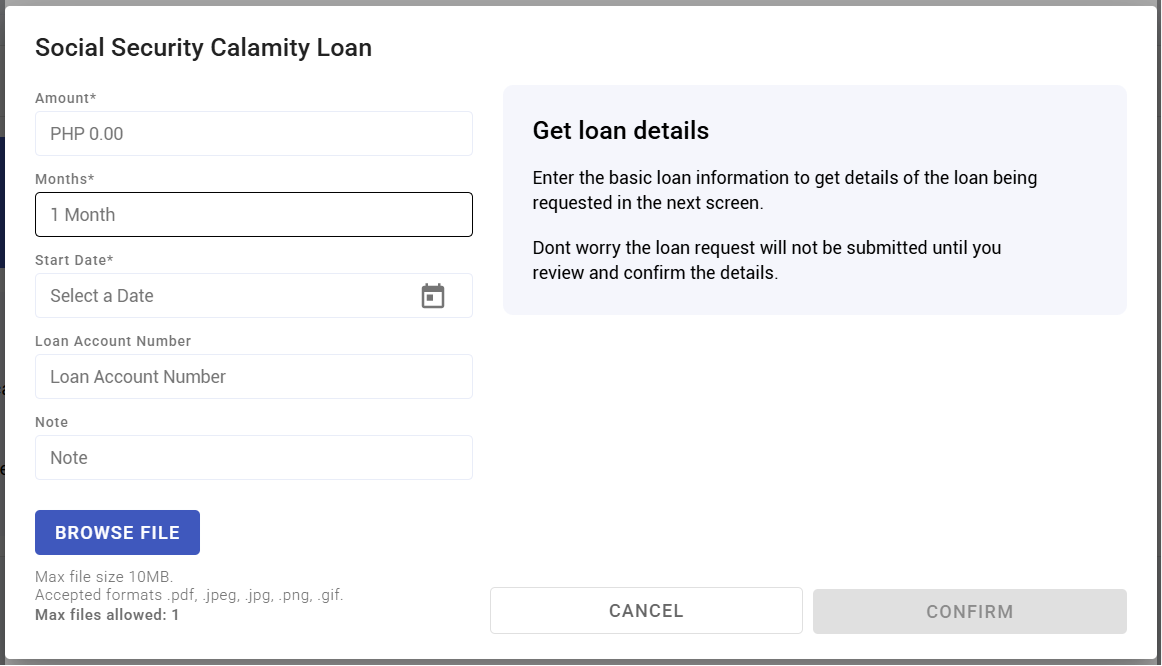
A loan is company money, repaid over months from your payslips. What you can borrow depends on the loan types your company offers, how long you have worked there, and your wage.
An advance is part of the pay you have already earned this period, released early. You can draw a share of what you have earned so far — not all of it, because the rest has to cover tax and contributions so your payslip still works out. A fee applies.
If you need to spread repayment over several months, that is a loan. An advance comes out of your next payslip in one go.
What Happens Next
- Loan instalments are deducted automatically from your payslip on the schedule.
- An advance is recovered in full from your next payslip, with its fee.
- Your outstanding balance falls as payments are made.
- If you leave, anything still owed is settled from your final pay.
Tips
- Look at the instalment, not just the amount you are borrowing. The instalment is what you live with each month.
- Check the total repayable before you agree. It is shown with the schedule, and it is the number people most often miss.
- Tell HR early if an instalment becomes unaffordable. A loan can often be paused or restructured; missed payments can add penalties.
- If you are taking an advance most months, it is worth a conversation. It usually means the timing of pay does not fit your outgoings, and there may be a better answer than a fee each period.
Troubleshooting / FAQ
Q: My instalment did not come off this month. It may not have been scheduled for this period, or the loan may have been paused. Ask HR to check.
Q: My payslip was much smaller than usual. Check whether an advance was recovered this period, on top of your normal deductions.
Q: Can I pay my loan off early? Usually — ask HR to settle it against your outstanding balance.
Q: Why can I not draw all the wages I have earned? Part is held back to cover tax and contributions, so your payslip does not come out at nothing.
Q: I am leaving. What happens to my loan? The outstanding balance is settled from your final pay.
Screenshots
These screenshots came from our previous help centre and may show an earlier version of the interface.