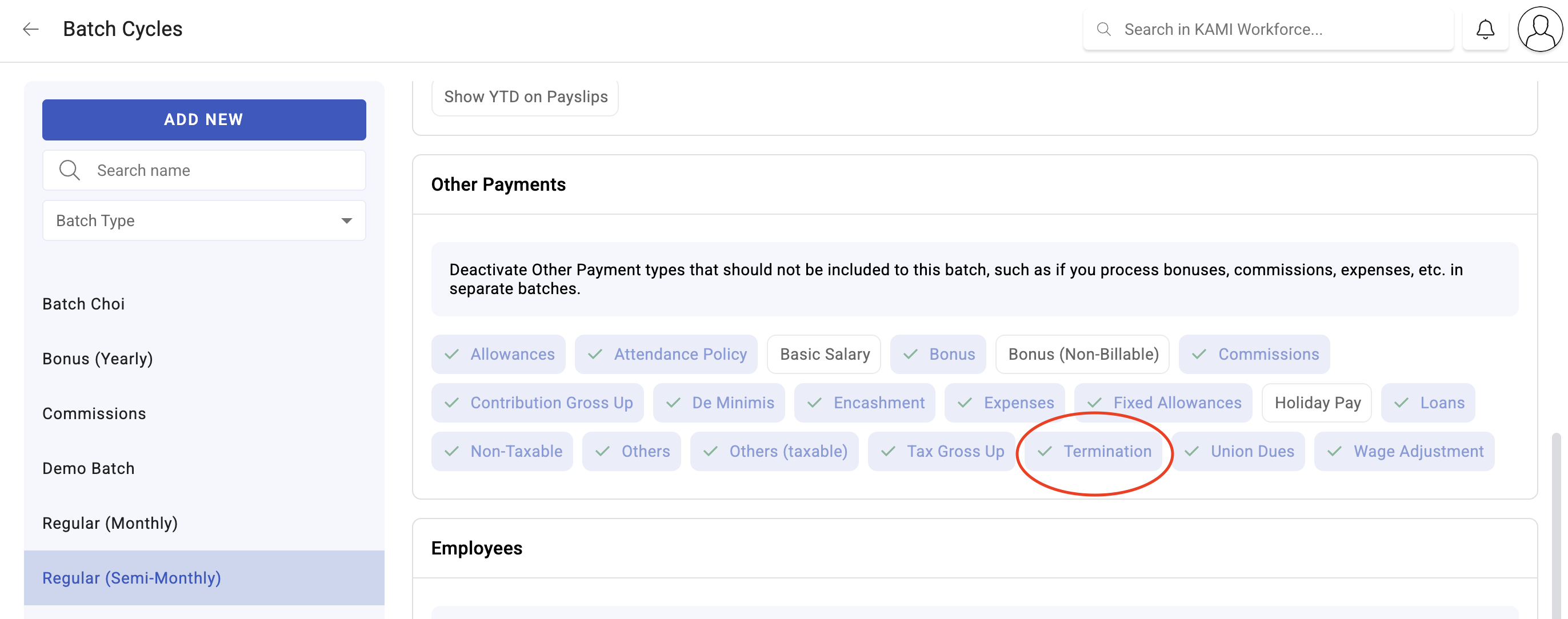
Final pay on termination
Final pay is the most consequential payslip KAMI produces. It is calculated once, paid to someone who is leaving, and reviewed by people who have every reason to check it carefully. The entitlements depend on why the employment ended, not just when.
Where: Payroll › the payroll run › Bulk termination, or the individual payslip You need: payroll rights for that batch cycle, and the rights to terminate an employee
Before You Start
Get the termination reason right first. It is not an administrative label — it decides which components of final pay are due. A resignation and a redundancy produce different entitlements from the same employee on the same salary.
Confirm the last day. Proration, leave balances and service length all count from it, so a wrong date is wrong in several places at once.
Settle attendance and leave. Unused leave may be encashed and outstanding attendance affects the final period's pay. Both must be final before you calculate.
Check outstanding deductions. Loans and advances usually have to be settled from final pay.
The components of final pay
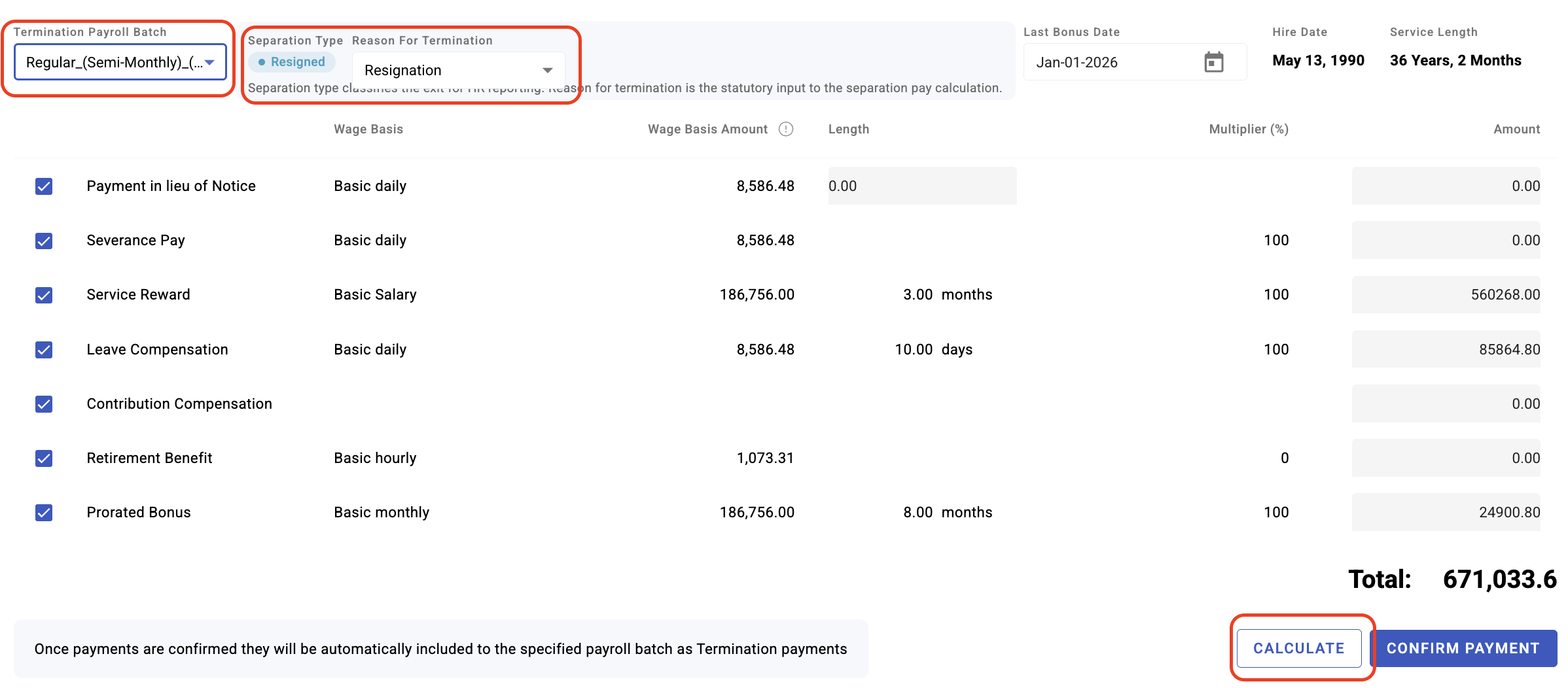
| Component | What it covers |
|---|---|
| Payment in lieu of notice | Notice period not worked |
| Severance pay | Statutory or contractual severance |
| Service reward | Long-service entitlement |
| Leave compensation | Encashment of unused leave |
| Contribution compensation | Compensation relating to contributions |
| Retirement benefit | Retirement entitlement |
| Prorated bonus | The share of bonus earned in the part-year |
Which of these apply is driven by the termination reason, configured per country in your termination settings — see Termination settings.
The reason drives the entitlement
Termination reasons are defined per country because the statutory rules are. In the Philippines they include retrenchment, cessation, disease, replacement, redundancy, obsolescence, labor-saving devices, reinstatement, resignation, retirement, transferred and death. Other countries have their own lists.
⚠️ Choosing a reason that is administratively convenient rather than accurate produces a legally wrong payment. Redundancy and resignation are not interchangeable, and the difference is money the employee is either owed or not.
Wage basis
Each component is calculated on a wage basis you configure — basic hourly, basic daily, gross daily, basic monthly, fixed monthly, gross monthly, average total wage, or basic salary.
The choice matters as much as the multiplier. Severance at one month's gross monthly wage is materially more than one month's basic — for an employee with significant allowances, substantially so. Set these deliberately, from your legal advice, and record why.
How to process final pay
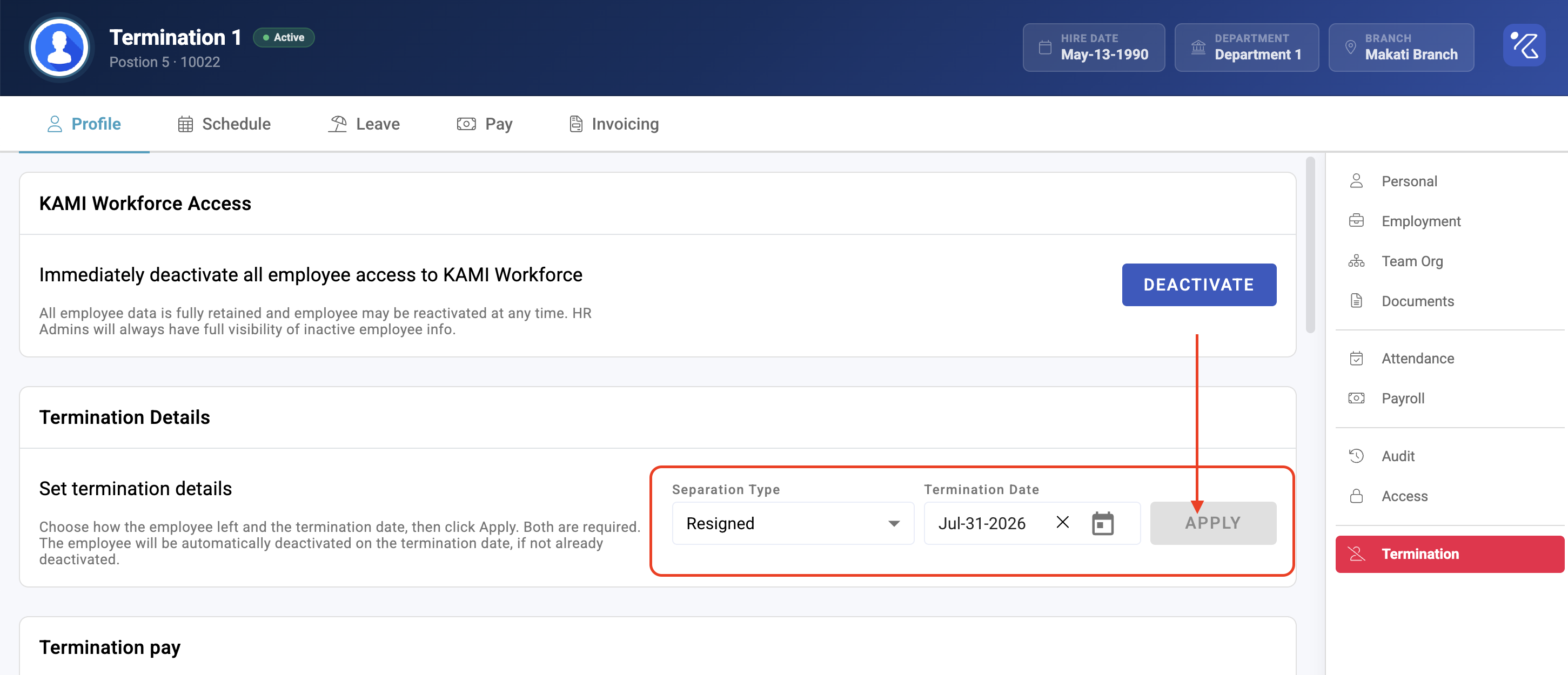
- Terminate the employee with the correct reason and last day.
- Settle attendance, leave and outstanding deductions for the final period.
- Open the payroll run covering the last day.
- Calculate the payslip. For several leavers at once, use Bulk termination.
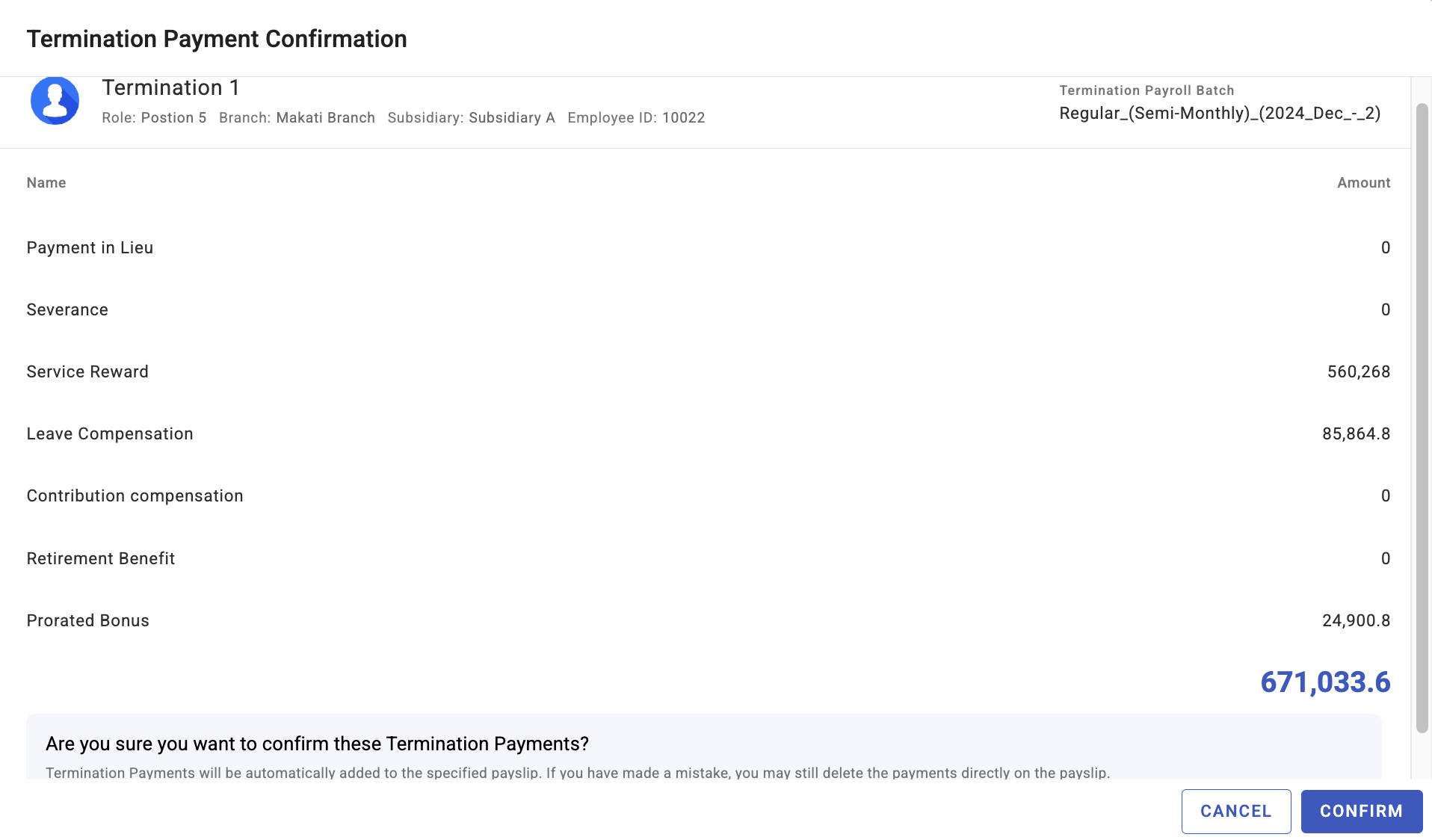
- Check every component individually against the entitlement you expect, rather than reviewing the total.
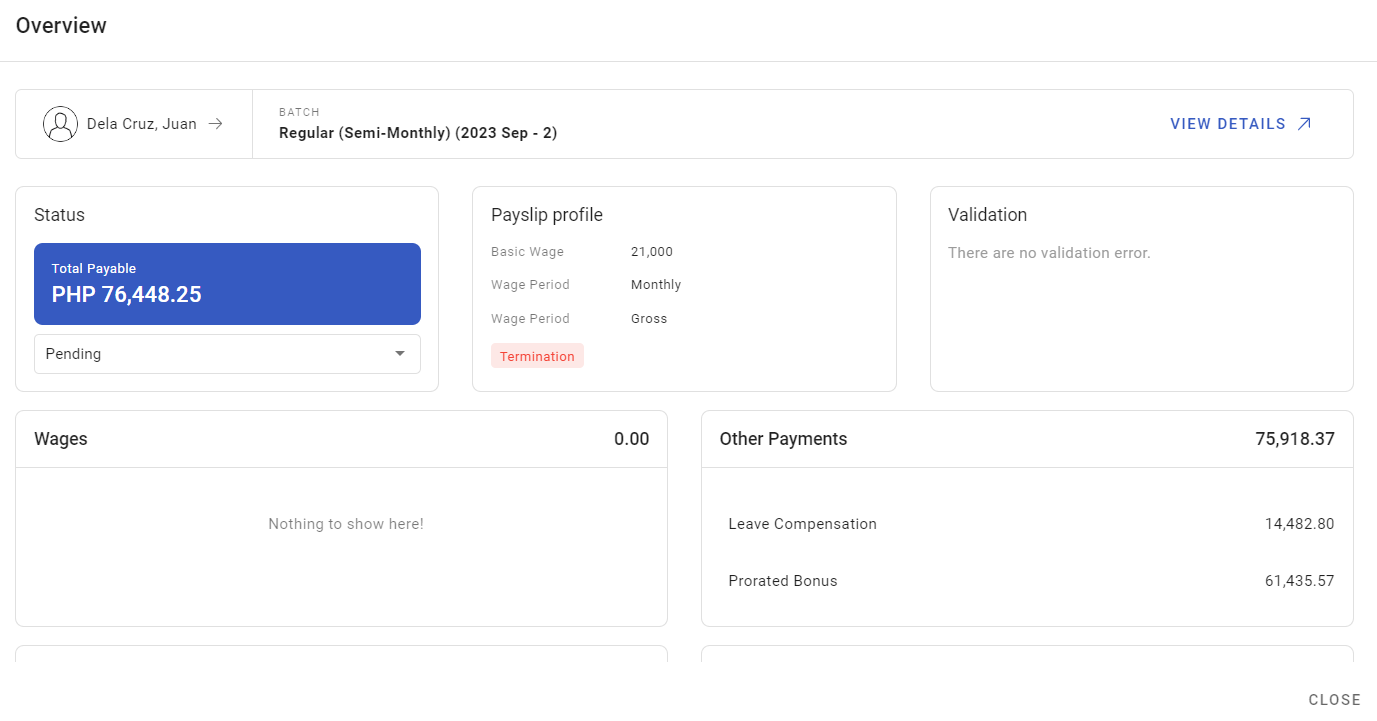
- Verify, approve, close and pay as normal.
What Happens Next
- Separation pay is taxed on the termination basis rather than as regular income, which is a different treatment — see Payslip tax details explained.
- The final payslip appears in that period's statutory and year-end reporting.
- The employee's record moves to terminated; see Deactivating, terminating and rehiring employees.
- Recalculating a final payslip rebuilds it from source, discarding manual adjustments — a real risk here, because final pay is where hand-corrections are most common.
Tips
- Have the termination reason confirmed by whoever owns employment law, in writing, before you calculate. Everything else follows from it.
- Check the components against the employee's contract, not only against statute. Contractual entitlements can exceed the statutory minimum, and KAMI pays what it is configured to pay.
- Reconcile leave encashment against the leave ledger. It is the component most often disputed, and the balance is checkable.
- Do a dry run for your first few. Calculate, review, and do not verify until someone senior has read it.
- Never recalculate a final payslip after adjusting it without re-checking every line. The adjustment will be gone.
- Keep the working. A leaver querying their final pay six months later is common, and the calculation basis is what answers them.
Troubleshooting / FAQ
Q: A component we expected is missing. It is not enabled for that termination reason in your termination settings, or the reason recorded is not the one you intended.
Q: Severance looks lower than expected. Check the wage basis for that component. Basic and gross bases produce very different figures for the same employee.
Q: The final payslip is not prorated correctly. Check the last day on the employee's record. Proration is calculated from it.
Q: Leave encashment does not match the leave balance. Confirm leave was finalised before calculating, and check which leave types are configured as encashable.
Q: Tax on separation pay looks unusual. It is taxed on the termination basis rather than as regular income, so it will not resemble a normal month.
Q: We terminated the wrong employee. Can it be reversed? Reverse the termination on the employee record and recalculate the payslip — but if the payslip has been paid, treat it as a correction rather than an undo.
Screenshots
These screenshots came from our previous help centre and may show an earlier version of the interface.