Restructuring a loan
Restructuring replaces a live loan with a new one on different terms — usually a longer term and a smaller instalment, for an employee who can no longer manage the original. It is the alternative to a loan quietly failing.
Where: Benefits › Team loans › the loan You need: benefits rights covering that employee, and whatever approval your policy requires
When to restructure, and when not to
| The situation | Do |
|---|---|
| The employee cannot afford the instalment for the foreseeable future | Restructure |
| A short-term difficulty of a month or two | Pause the plan instead |
| One instalment needs moving | Skip it and defer |
| The loan was set up wrongly from the start | Correct it before disbursement if you can |
Restructuring is a real change to a credit agreement. Reach for a pause or a deferred instalment first — they are reversible and do not change what the employee agreed to.
What restructuring does
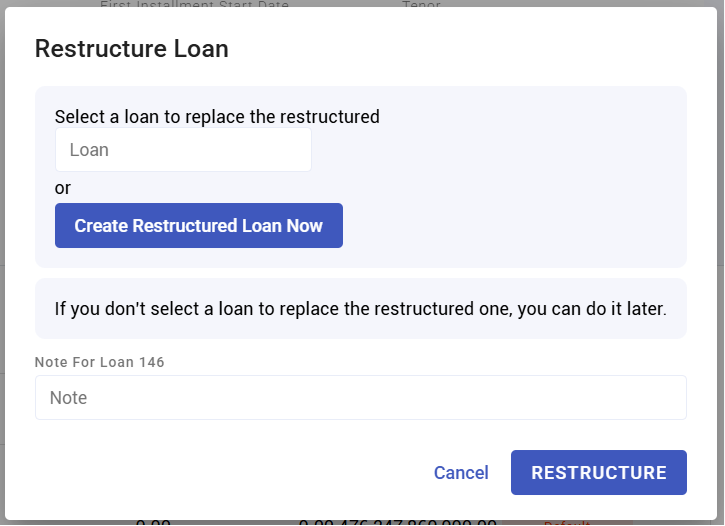
The original loan is closed and a new loan is created carrying the outstanding balance, on new terms. The new loan records its link back to the loan it replaced, so the history remains traceable rather than looking like two unrelated borrowings.
⚠️ A longer term at the same rate means more interest in total, even though each payment is smaller. Show the employee both figures — the new instalment and the new total repayable — before they agree. A restructure that quietly increases what someone owes is a complaint waiting to happen.
How to restructure
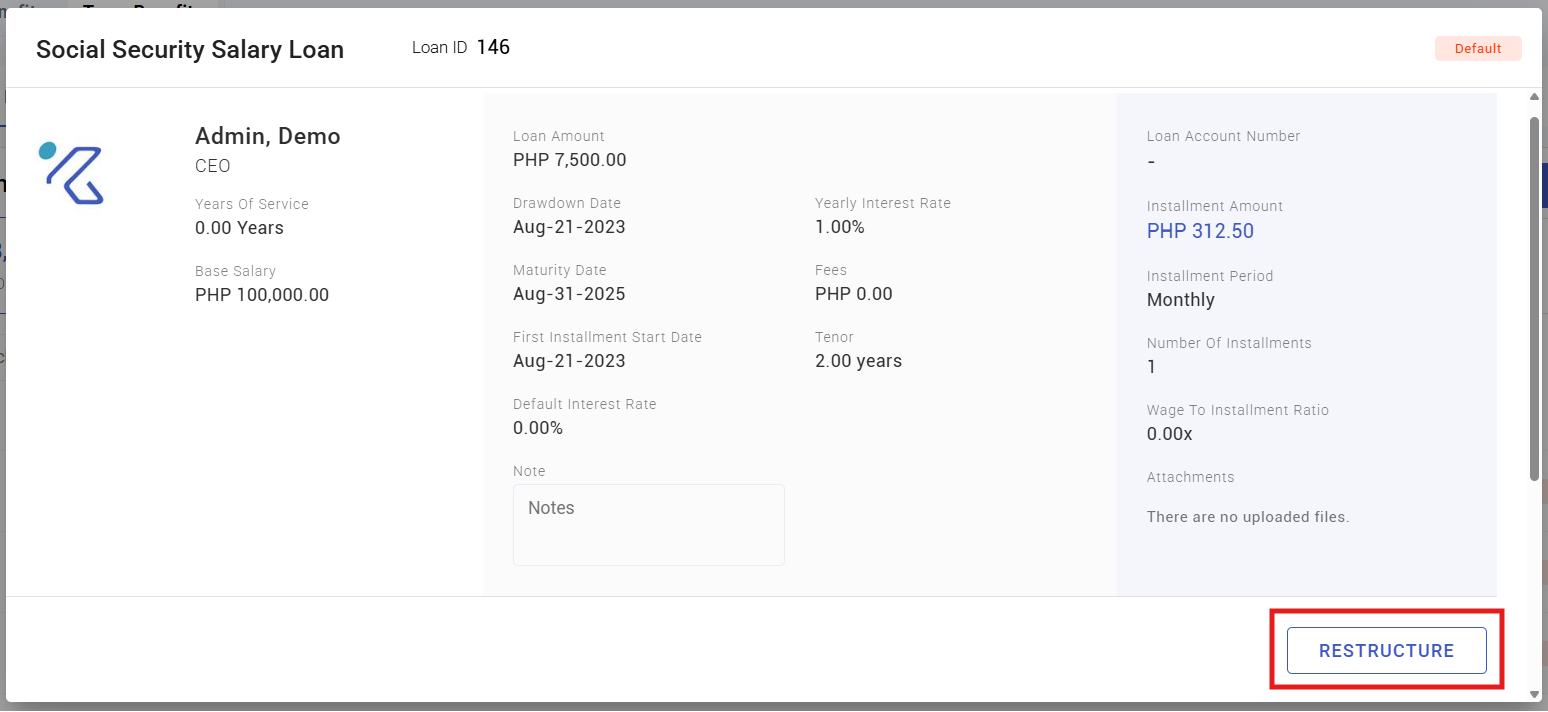
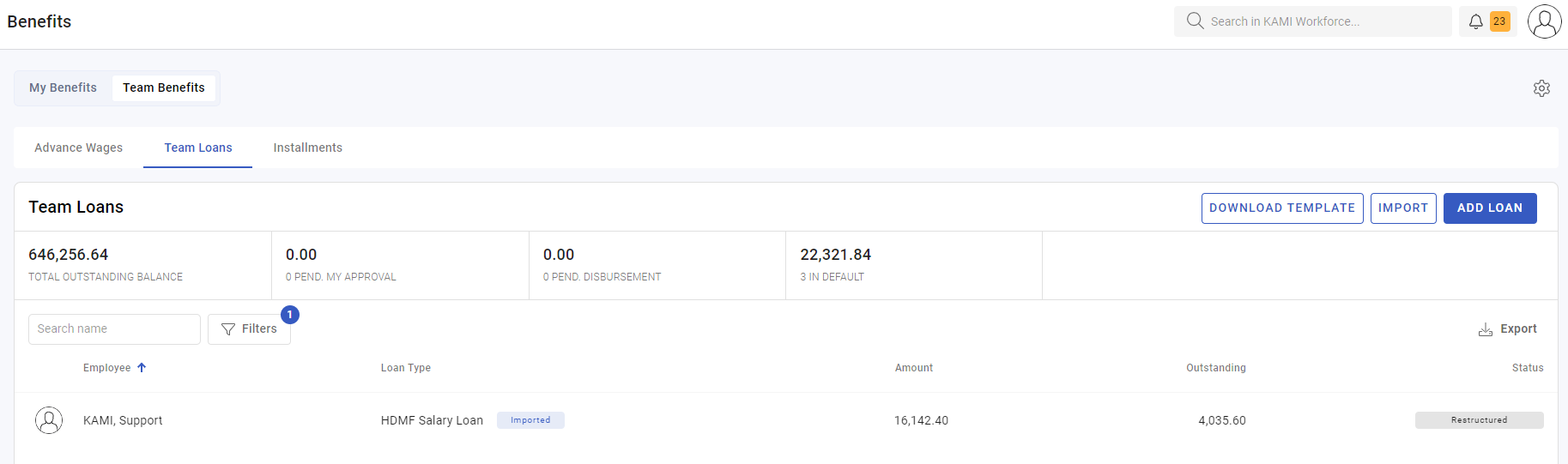
- Open the loan in Benefits › Team loans.
- Confirm the outstanding balance — this is what carries over.
- Restructure, setting the new term and any revised terms.
- Review the new schedule — instalment amount, end date, total repayable.
- Agree it with the employee in writing before it takes effect.
- Approve and let the new schedule begin.
What Happens Next
- The original loan closes and the new one takes over repayment.
- Deductions follow the new schedule from the next scheduled instalment.
- The link between old and new loans is preserved for reporting.
- The employee's outstanding balance is now against the new loan.
Tips
- Show both totals before and after. The instalment falls and the total usually rises; the employee is entitled to see both.
- Get agreement in writing. This is a change to a credit arrangement, not an administrative adjustment.
- Ask why before restructuring. If the cause is a pay change or an over-generous original loan, the loan type's wage multiple may be the thing to fix.
- Do not restructure repeatedly. A second restructure usually means the debt is not affordable at all, and that needs a different conversation.
- Check the new instalment against the employee's current pay, not the pay they had when they borrowed.
Troubleshooting / FAQ
Q: The employee's total repayable went up after restructuring. Expected if the term extended — interest accrues over a longer period. Show it explicitly.
Q: Can we restructure without changing the term? The point of restructuring is to change the terms. If nothing changes, a pause or a deferred instalment is what you want.
Q: What happens to the original loan? It closes, with a recorded link to the loan that replaced it.
Q: Is the outstanding balance carried in full? Yes — the new loan takes on what remained.
Q: The employee left mid-restructure. The outstanding balance on the live loan is settled from final pay, as normal.
Screenshots
These screenshots came from our previous help centre and may show an earlier version of the interface.